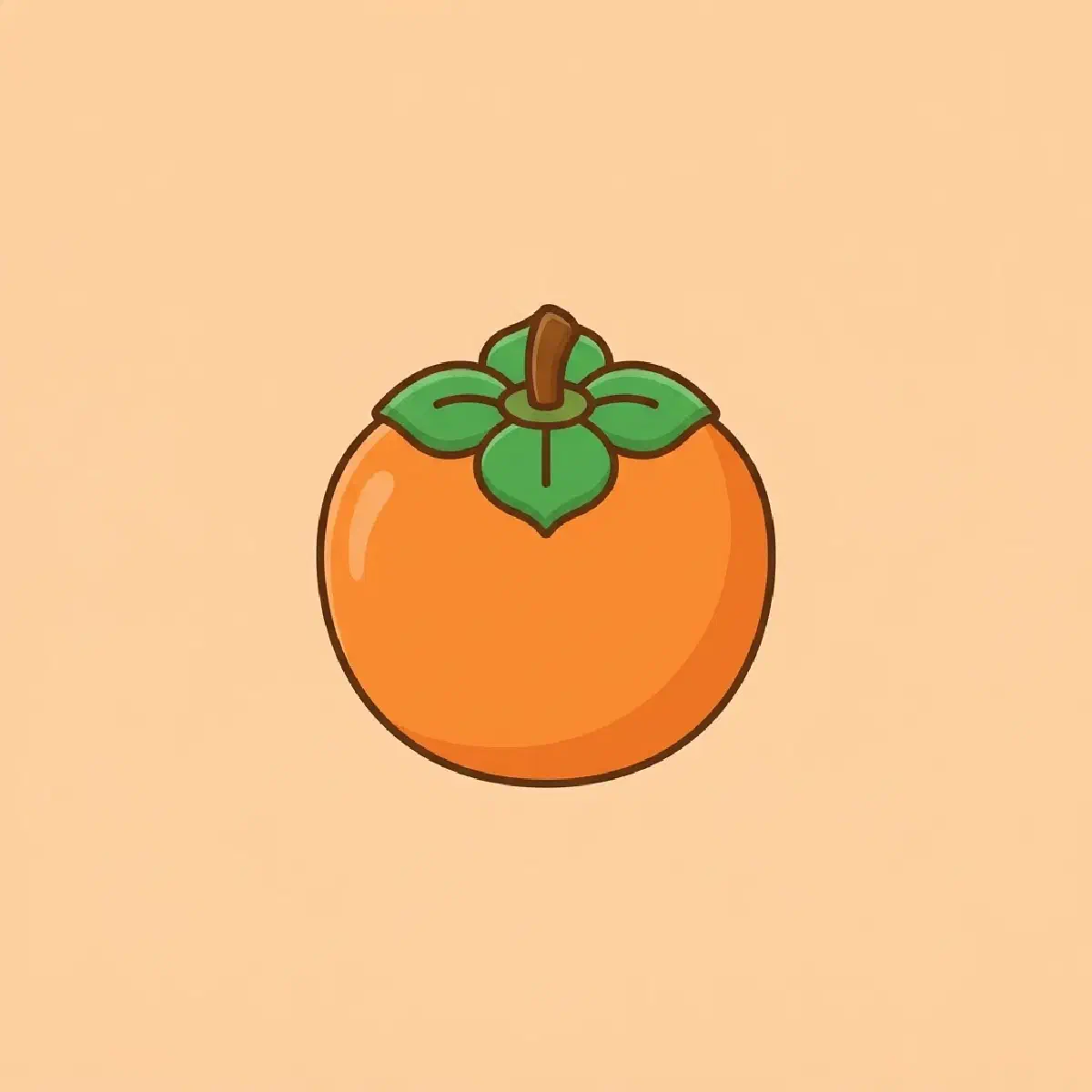

🔥 In a nutshell#
Persimmon folds autumn sweetness into a soft, custardy center — sweetest after frost.
📋 Basics#
| Item | Detail |
|---|---|
| Also called | kaki |
| Family | Ebenaceae, Diospyros |
| Nature | sweet-astringent, cool |
| Calories | ≈ 74 kcal/100g |
👅 Taste & Texture#
Ripe flesh like honey, melts in the mouth, sweet with astringency (unripe); frozen is cleaner.
💪 Nutrition & Benefits#
- Beta-carotene and vitamin C for eyes/skin;
- Fiber aids regularity;
- Tannins (the astringency) traditionally astringent.
🌍 Where It Grows#
Fuping (famous dried), Gongcheng, Shandong, Hebei.
🍂 Harvest Season#
Autumn to early winter (Oct–Nov), sweeter after frost.
🛒 Picking & Storing#
- Crisp: firm orange-red; soft: gently springy;
- De-astringe with warm water/alcohol; freeze for «ice persimmon».
⚠️ Cautions#
- High tannin — don’t eat empty-stomach or with crab/protein (stone risk);
- Cooling — moderate if weak gut.
✨ Fun Facts#
The white dust on dried persimmons isn’t mold but «persimmon frost» — mannitol and glucose, traditionally used for lungs.
Note: the above reflects general nutrition knowledge and is not medical advice.